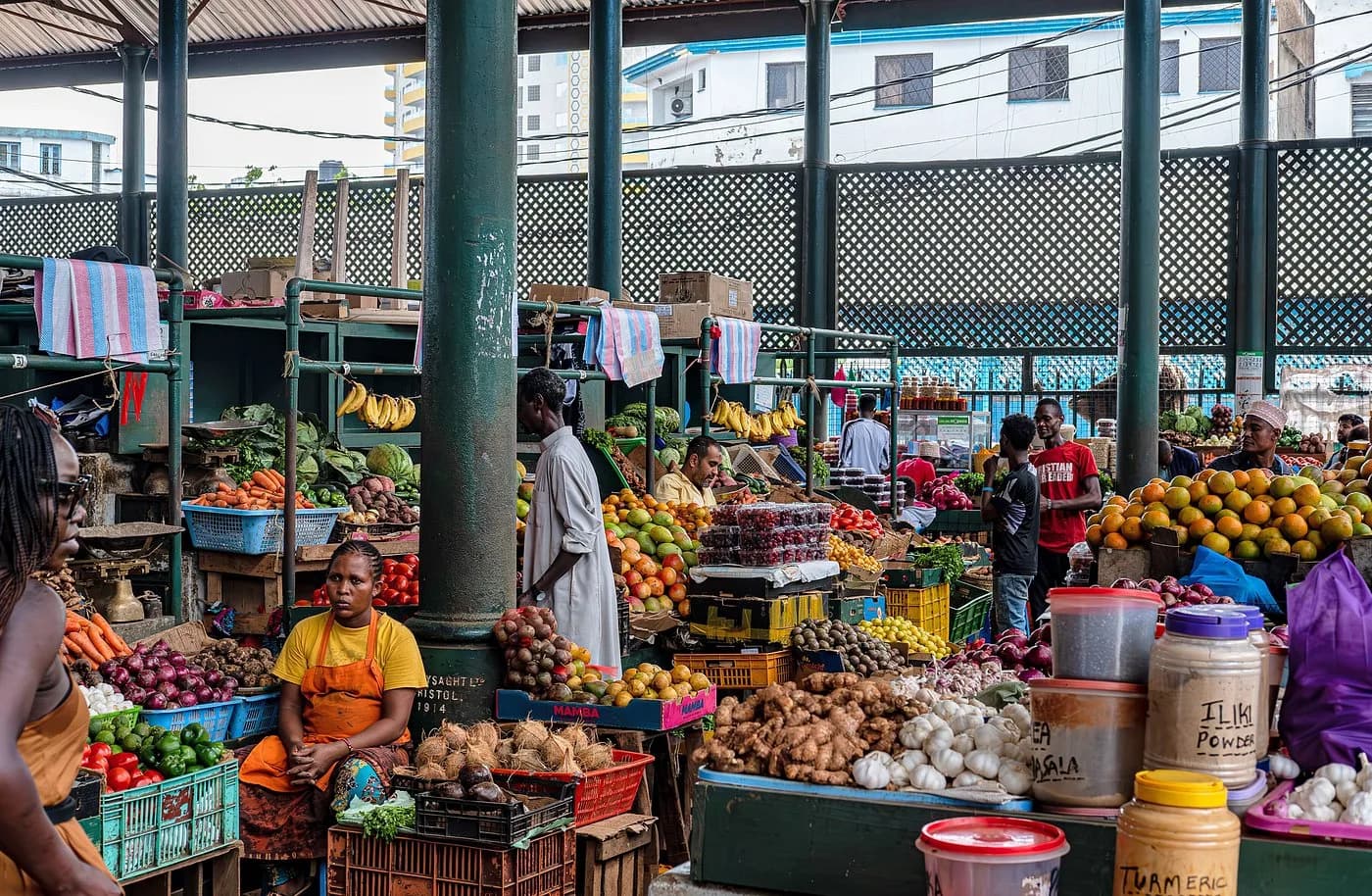
I've been walking these same streets with visitors for over twenty years, and Old Town still surprises people who think they've seen it all from photos. It's a working neighborhood, not a museum — families live above the same carved doorways tourists stop to photograph, and the best parts aren't always the ones you'd find on your own. This guide lays out the route I actually use, what each stop is worth your time for, and honestly, when it's worth having someone like me along versus wandering in yourself.
Contents
- The route: how Old Town fits together
- Suggested walking order
- How long it takes
- Guided vs. self-guided: what you actually get with a guide
- What to wear and bring
- FAQ
The route: how Old Town fits together
Old Town sits on the southeastern tip of Mombasa Island, wedged between the harbor and Fort Jesus. It grew up over centuries of Swahili, Arab, Portuguese, and Indian trade, and you can still read that history in the architecture street by street — carved wooden doors with Gujarati influence a block from Omani-style balconies, a mosque a few doors from a Hindu temple. The streets are narrow enough that cars mostly can't get through, which is exactly why walking is the only way to actually see it.
If you'd rather see Old Town as part of a broader day in the city, it's also the anchor stop on our half-day city tour.
Suggested walking order
I usually run this route starting near Fort Jesus and working back through town, so you finish near the market and the waterfront:
-
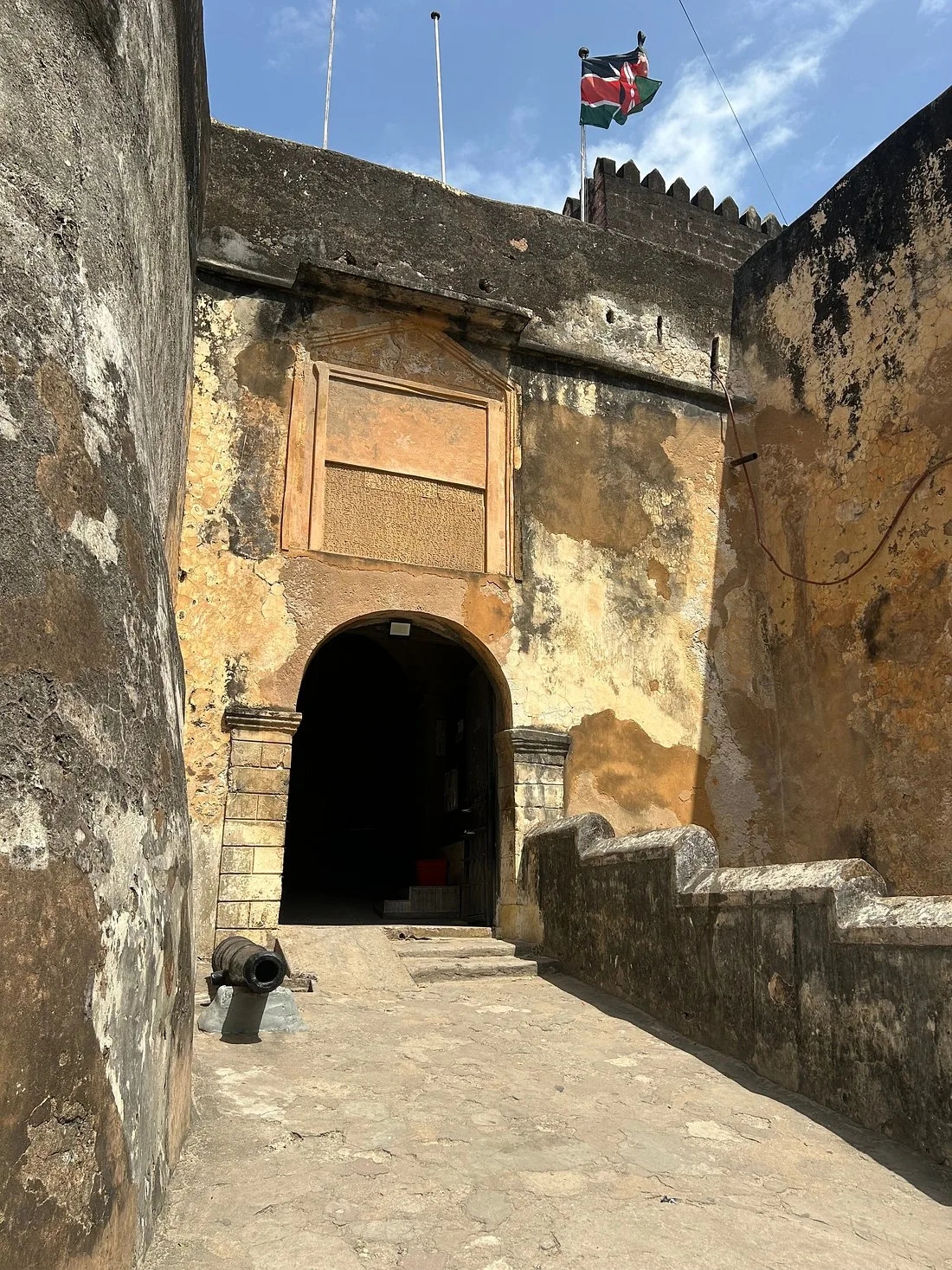
Fort Jesus — Start here. Built by the Portuguese in the 1590s and now a UNESCO World Heritage Site run by the National Museums of Kenya, it gives you the historical context (Portuguese, Omani, British occupation, in that order) that makes the rest of the walk make more sense.
-
Ndia Kuu Road — The main spine of Old Town. Slow down here for the carved doors — this is the highest concentration of them.
-
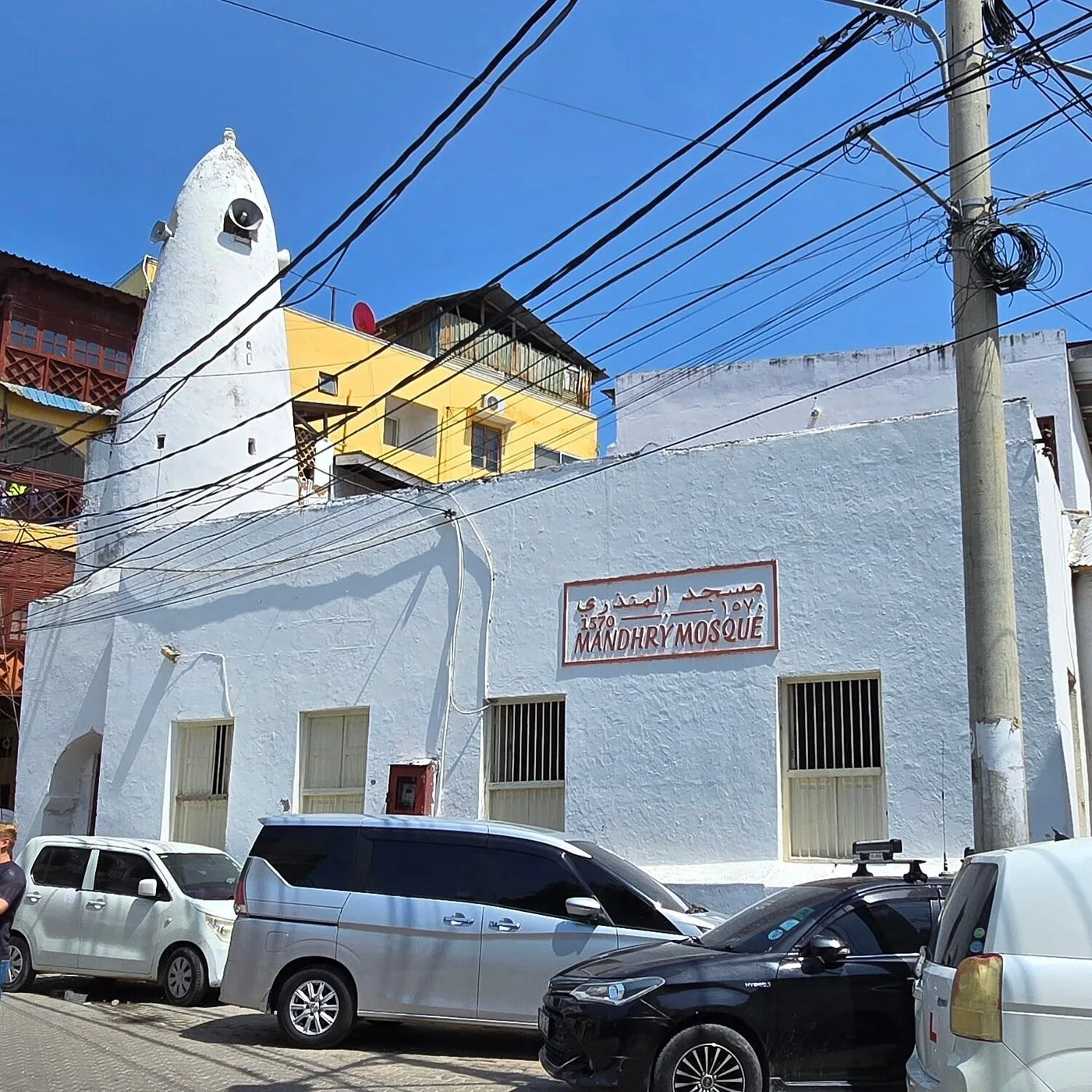
Mandhry Mosque — Built in 1570, it's the oldest mosque in Mombasa and still active today. Worth a look from outside even if you're not visiting religious sites.
-
The Old Port / dhow harbor — Depending on the tide, you'll see traditional dhows loading and unloading, much like they have for centuries.
-
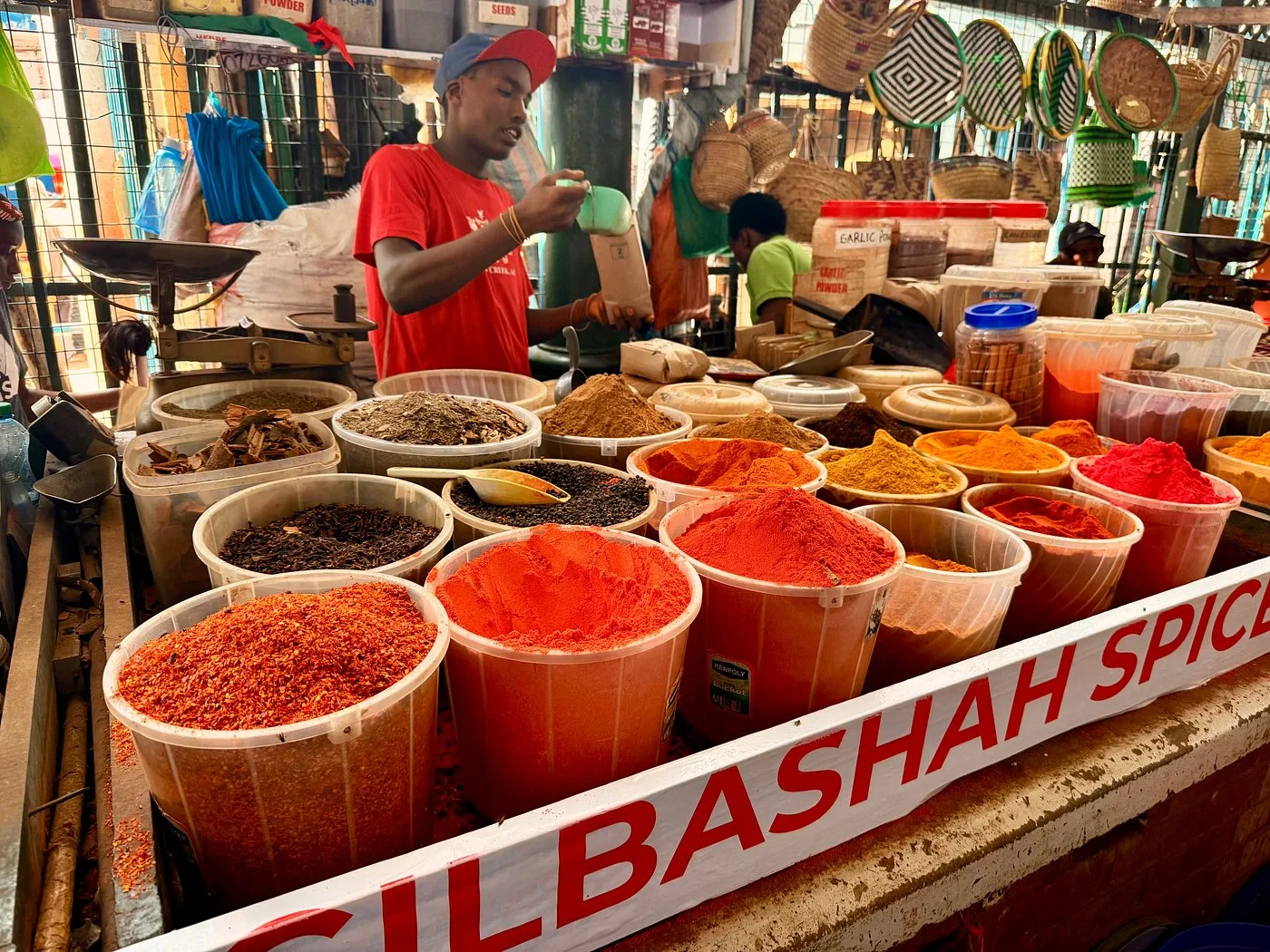
The spice market and Government Square — This is where the walk opens up again — a good place to slow down, browse spices, and see Old Town as a living neighborhood rather than a historical site.
How long it takes
Budget 2 to 3 hours for this walk if you want to actually stop, ask questions, and go inside Fort Jesus rather than just passing it. Rushing it in under an hour means you'll walk past most of what makes the area interesting.
Guided vs. self-guided: what you actually get with a guide
You can absolutely walk Old Town on your own — it's safe during the day and the main route isn't hard to find. Here's the honest trade-off:
Going self-guided, you'll see the buildings, but you'll miss most of the context: which doors are original versus restored, which street led to the old slave market, why a particular building has both a minaret and a cross carved into the stonework. You'll also likely miss the parts that aren't on any map — the courtyard where a family has run the same tailoring shop for three generations, or which spice trader will actually let you taste before you buy.
With a local guide, you get the history in the right order, someone who can translate signage and conversations, and — practically speaking — someone who knows which streets to avoid at midday heat and which shopkeepers won't hassle you if you're just looking. A guide also means you're not standing in Fort Jesus reading a plaque instead of looking at the fort.
If you're short on time or this is your only day in Mombasa, I'd lean toward a guide — you'll see more in less time. If you've got an extra day and enjoy getting a little lost, self-guided works fine for the main route. Read more about my own background as a guide if you're deciding who to book with.
What to wear and bring
- Modest dress — shoulders and knees covered, especially near the mosque. This isn't strictly enforced for tourists but it's respectful and you'll get a warmer reception.
- Closed shoes — the streets are uneven cobblestone and coral-block paving.
- Cash (small bills) — for the spice market and any small purchases; most stalls don't take cards.
- Water and a hat — there's not much shade until you reach the market area.
FAQ
Is Old Town Mombasa safe to walk around?
Yes, during daylight hours it's a safe, well-trafficked area with a steady flow of both locals and tourists. Use normal city precautions — keep bags zipped and valuables out of sight — the same as you would anywhere.
Do I need to book Fort Jesus entry separately?
Fort Jesus has its own entry fee, separate from a walking tour. If you're booking a guided tour, confirm whether Fort Jesus entry is included or needs to be paid at the gate.
Can I do this walk in one morning?
Yes — the full route with stops takes 2–3 hours, which comfortably fits into a morning before the midday heat sets in.
Is Old Town wheelchair or stroller accessible?
Not well. The streets are narrow, uneven, and largely unpaved cobblestone, which makes wheelchairs and strollers difficult. Let your guide know in advance if mobility is a concern so the route can be adjusted.
What's the best time of day to go?
Early morning (before 10am) or late afternoon, both for the light and to avoid the midday heat in streets with little shade.
Ready to see it for yourself? Book the Old Town walking tour and I'll show you the route, the history, and a few spots that don't make it into the guidebooks. Or browse all our Mombasa tours if you're planning more than one day on the coast.